
Pet-Specific Turf Differs in Fiber, Backing, Infill, and Base
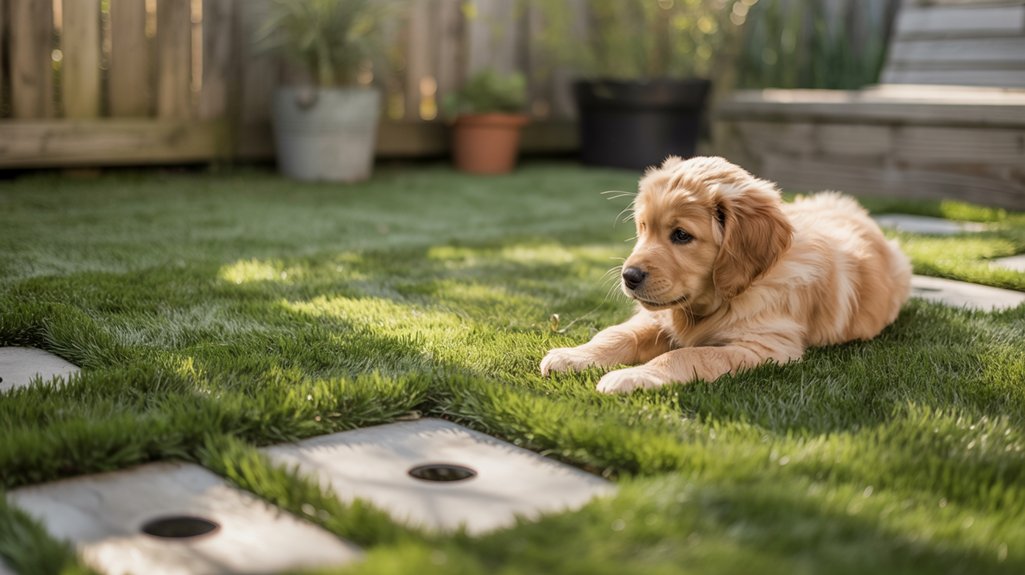
Pet-specific turf differs from standard turf in fiber density, backing type, infill material, and base depth. Pet-relief zones typically use denser face yarn (10,000–16,000 dtex), polyurethane backing, zeolite or acrylic-coated silica infill, and 6–8 inches of aggregate base. Pet turf is a synthetic lawn system engineered for odor control, drainage, and heavy-use durability.
Fiber Density and Blade Stiffness in Pet Turf
Face yarn specified for pet-relief turf typically falls in the 10,000 to 16,000 dtex range, substantially denser than yarn used in residential aesthetic lawns. This higher linear density produces a stiffer, more resilient blade capable of rebounding under concentrated foot and paw traffic in heavy-use zones. High-density polyethylene is frequently chosen for these dual-fiber systems precisely because its blade stiffness is a functional advantage rather than a cosmetic one, helping the turf resist matting near gates, water bowls, and relief areas. Nylon offers even greater stiffness but is generally excluded from pet applications because it retains heat and runs hotter underfoot than polyethylene, a tradeoff that matters in outdoor installations where dogs make direct, prolonged contact with the surface.
Why Pet Products Favor Polyurethane Backing
Polyurethane secondary backing, unlike SBR latex, does not absorb water or retain crystallized urine residue within its matrix. This distinction matters directly for pet applications, where repeated liquid waste exposure can saturate a latex backing over time, locking in odor-causing compounds that resist rinsing. Polyurethane’s non-absorbent composition instead allows urine to pass through to drainage perforations rather than lingering in the backing material itself. Because drainage perforations are often the rate-limiting component of the overall drainage path, their pattern and density deserve scrutiny independent of backing choice. A polyurethane backing paired with inadequate perforation coverage can still produce standing moisture, so installers typically evaluate both specifications together rather than treating backing material as a standalone solution to odor and hygiene concerns in pet-relief turf systems.
Zeolite Infill and How It Captures Ammonia
Clinoptilolite, a naturally occurring zeolite mineral, is the specific compound used in residential pet-relief turf infill for its ammonia-capturing capability. Its crystal lattice is microporous, giving the material a high cation exchange capacity that allows it to bind ammonium ions released when urine breaks down. Rather than letting ammonia volatilize into the air as odor, the zeolite particle holds the compound within its internal structure. This exchange capacity is finite, meaning each particle can only absorb so much ammonium before its binding sites are saturated. Regular flushing with water is required to release captured ammonium from the exchange sites and restore the infill’s odor-control function, which is why manufacturers typically recommend scheduled rinsing as part of routine maintenance for zeolite-infilled pet turf systems rather than treating the infill as a permanent, maintenance-free solution.
Acrylic-Coated Sand and Other Pet-Oriented Infills
Acrylic-coated silica sand incorporates antimicrobial agents directly into its coating layer, a formulation designed specifically to suppress bacterial growth in pet-relief turf systems. Unlike raw silica sand, the acrylic coating seals individual grains, which reduces the fine dust generated during installation and routine maintenance such as brooming or infill top-ups. The coating also limits moisture absorption into the sand particle itself, so bacteria and odor-causing organisms have less surface area to colonize compared to uncoated aggregate. This combination of antimicrobial treatment and dust reduction makes acrylic-coated sand a common secondary or standalone infill choice alongside zeolite in residential pet-relief installations, particularly where weight and ballast performance matter as much as odor control. Manufacturers typically pair it with polyurethane-backed turf to avoid compounding moisture retention issues at the backing layer.
Organic Infills and Their Limits in Pet Use
Cork and coconut fiber are the two organic infill materials used in pet-relief turf systems, and both retain moisture at rates markedly higher than mineral alternatives like zeolite or acrylic-coated sand. This moisture retention creates conditions favorable to bacterial and fungal colonization, particularly in zones with frequent urine saturation and limited air exchange. Because organic fibers swell and compact over repeated wetting cycles, drainage planning becomes a functional requirement rather than an optional upgrade; installers typically pair these infills with polyurethane secondary backing and higher-density perforation patterns to compensate. Without adequate drainage engineered beneath the surface, organic infill systems are more prone to odor retention and biological buildup than their mineral counterparts, limiting their suitability to installations where maintenance schedules can offset the added moisture burden.
Base Construction for Heavily Used Dog Runs
Aggregate base depth for heavily used dog runs commonly ranges from 6 to 8 inches, deeper than the 3 to 4 inches typical of ornamental landscape turf installations. This added depth distributes concentrated foot traffic and urine saturation across a larger volume of material, reducing compaction and preventing standing moisture at the surface. Dog runs subject to continuous use are frequently built on a cement-treated base rather than compacted aggregate alone, with drainage channels engineered directly into the base layer. Without those channels, a cement-treated base risks becoming an impermeable barrier that traps urine and water against the turf backing, undermining the odor-control function of any infill selected above it.
Frequently Asked Questions
Questions about pet-specific turf tend to cluster around the same few decisions: which infill actually addresses odor, whether backing material matters as much as manufacturers claim, and how different the fiber really is from standard landscape product. Zeolite remains the most common answer to the odor question, though its ammonium-capturing capacity is finite and depends on periodic flushing to restore exchange sites rather than functioning as a permanent fix. Polyurethane backing, meanwhile, earns its reputation less from any single property than from what it avoids—namely, the moisture retention and residue buildup that plague SBR latex under repeated urine exposure.
What infill is used to control pet odor in artificial grass?
Zeolite, the mineral clinoptilolite, is the primary infill used to control pet odor in artificial grass. Its microporous structure captures ammonium from urine via cation exchange, though this capacity is finite and requires regular water flushing to reset. Acrylic-coated silica sand, with antimicrobial coatings, serves as an alternative option.
Is polyurethane backing better for pet turf?
Yes, polyurethane secondary backing is better for pet turf than SBR latex. It resists water absorption and doesn’t hold crystallized urine residue the way latex can. This reduces odor retention and supports drainage perforations critical to overall system performance.
Does pet turf use a different fiber than standard turf?
Yes, pet turf typically uses stiffer, denser fiber than standard landscape turf. Face yarn density commonly runs 10,000 to 16,000 dtex, often blended with high-density polyethylene for added stiffness. This supports dual-fiber systems designed to resist matting under heavy foot and paw traffic.
Does zeolite infill need maintenance?
Yes, zeolite infill requires regular maintenance to remain effective. Its cation exchange capacity for capturing ammonium is finite and becomes saturated over time. Routine water flushing resets the exchange sites, restoring odor-control performance for pet-relief turf.
Serving Its Service Areas with Artificial Grass Installation
Estate corridors with heavy dog traffic require base and drainage specifications that differ substantially from decorative lawn installations, particularly where clay-heavy soils slow percolation and demand deeper aggregate preparation. Backyard Paradiso brings this specification knowledge to pet-relief turf installation across these corridors, matching fiber density, backing, and infill selection to each property’s drainage realities rather than defaulting to standard residential turf packages. Consultations are available by appointment, with specification recommendations based on usage patterns, household size, and existing site drainage rather than a one-size approach. Properly specified pet turf functions as a long-term square footage investment, reducing the maintenance burden and odor management costs associated with natural lawns subjected to concentrated pet use, which supports resale value in markets where outdoor living space factors into buyer expectations. Backyard Paradiso extends this same approach to additional communities throughout the broader region, applying the same attention to base depth, infill chemistry, and backing selection wherever soil conditions and household needs vary from one property to the next.